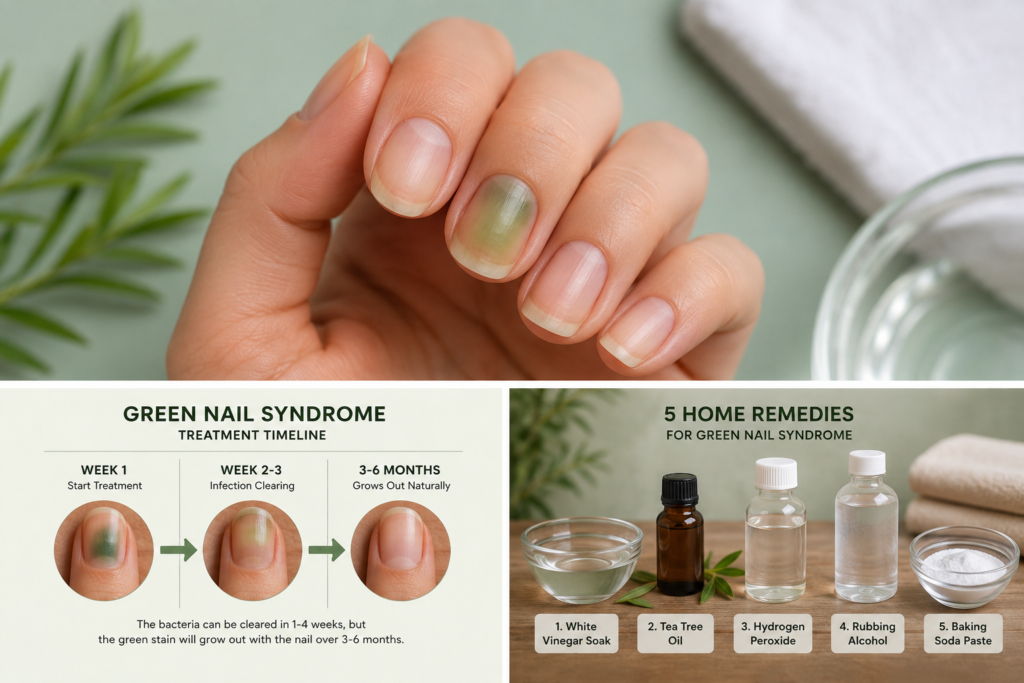

How to Treat Green Nails at Home: 5 Remedies That Actually Work
You took off your acrylics, press-ons, or dip powder, and there it was: a patch of greenish discoloration staring back at you. Before you panic, know that this is one of the most common nail complaints among people who wear nail enhancements. It has a name, a clear cause, and yes, you can treat it at home.
Green nail syndrome — medically called chloronychia — is a mild bacterial infection of the nail caused by a common bacterium called Pseudomonas aeruginosa. This bacterium produces blue and green-yellow pigments (called pyocyanin) that stain the nail plate, which is why the discoloration looks so vivid. It is not a fungal infection, and in mild cases, it responds well to home treatment.
Important: Green nail syndrome is bacterial, not fungal. Antifungal creams alone won’t resolve it. The remedies below are specifically chosen to target Pseudomonas aeruginosa.
This guide covers what causes green nails, how to assess severity, a step-by-step treatment process, five home remedies with exact instructions, and how to prevent it from coming back.
What Causes Green Nails?
Pseudomonas aeruginosa thrives in warm, moist environments. It is naturally present on skin and in water, so it only becomes a problem when given the right conditions to multiply: a dark, sealed-off space with trapped moisture.
This is exactly what happens when a nail enhancement lifts even slightly. A tiny gap forms between the natural nail and the acrylic, gel, or press-on. Water, soap, and bacteria work their way in. The nail cannot breathe, the moisture stays trapped, and the bacteria colonize quickly.
The most common triggers include:
Lifting or improper application of acrylic, gel, or press-on nails
Prolonged water exposure (washing dishes, swimming, or frequent handwashing without gloves)
Nail trauma that creates separation between the nail plate and nail bed
Using contaminated nail tools or old, expired nail products
Naturally thin or weak nails that are more prone to separation
The infection can occur in two places: on top of the natural nail (usually from a lifting enhancement) or underneath the nail (between the nail plate and nail bed). Both respond to the same home treatments.
Mild vs. Serious: How to Know If You Can Treat It at Home
Most green nail infections are mild and respond to home treatment within a few weeks. That said, some situations call for a doctor.
Signs it’s mild and safe to treat at home:
Small green, teal, or yellow-green spot (no larger than half the nail)
No pain, tenderness, or swelling around the nail
No unpleasant odor
Nail is still mostly attached to the nail bed
No fever or general illness
See a doctor if you notice:
The nail is lifting significantly from the nail bed (onycholysis)
The discoloration is spreading rapidly or turning very dark green or black
The area around the nail is red, swollen, or warm to the touch
You have pain or pus
You have diabetes, a compromised immune system, or poor circulation
The infection hasn’t improved after 4 weeks of consistent home treatment
Note: A doctor may prescribe a 1% acetic acid solution, topical antibiotics, or in rare cases oral antibiotics. These are more targeted than home remedies and appropriate for moderate-to-severe cases.
Step-by-Step: How to Treat Green Nails at Home
Follow these steps before starting any remedy. Skipping the preparation phase is the main reason home treatments fail.
Remove the nail enhancement. Acrylics, press-ons, gel, or dip powder must come off. The enhancement is sealing in bacteria and moisture. You cannot treat the nail through it.
Trim the nail short. Cut the nail as short as feels comfortable. This reduces the surface area available for bacteria and exposes the infected area to air and treatment.
Gently clean under and around the nail. Use a soft nail brush and mild soap. Do not scrub aggressively, as this can damage the nail bed.
Keep the nail completely dry between treatments. Moisture is what the bacteria need to survive. Wear gloves for washing up, drying the nail thoroughly after any water contact is non-negotiable.
Apply your chosen remedy (see below) 1-2 times daily. Consistency matters more than intensity. Short, daily treatments outperform occasional soaks.
Allow the nail to grow out naturally. Even after the bacteria are gone, the green stain remains in the nail plate and must grow out. Trim the discolored portion as it reaches the free edge.
5 Home Remedies for Green Nail Syndrome
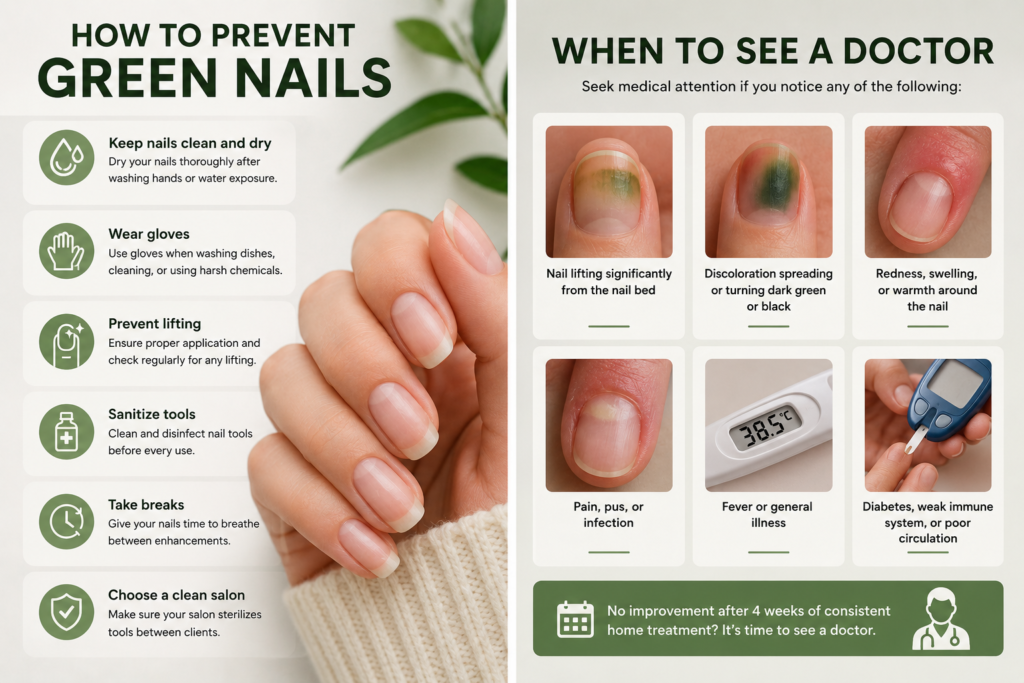
Each of the following remedies creates an environment that Pseudomonas aeruginosa cannot survive in. All are available at any pharmacy or grocery store.
1. White Vinegar Soak (Most Recommended)
White vinegar is acidic (acetic acid), and Pseudomonas aeruginosa is highly sensitive to acidic environments. This is the first-line home treatment recommended by many dermatologists for mild cases.
How to do it:
Mix 1 part white vinegar with 4 to 6 parts warm water in a small bowl
Soak the affected nail for 15 to 20 minutes
Do this once or twice daily
Dry the nail thoroughly afterward
Pro tip: White vinegar and apple cider vinegar both work. White vinegar is slightly more acidic and typically preferred, but either is effective.
2. Tea Tree Oil
Tea tree oil (Melaleuca alternifolia) has natural antiseptic and antibacterial properties. Research supports its effectiveness against a range of bacteria, including strains of Pseudomonas.
How to use it:
Dilute option: Mix 2 parts tea tree oil with 12 parts carrier oil (coconut or almond oil). Apply with a cotton swab directly to the nail 2 to 3 times daily.
Undiluted option: Apply 2 to 3 drops of 100% pure tea tree oil directly to the affected nail with a cotton swab. Perform a skin patch test first since some people are sensitive to undiluted essential oils.
Always let the oil absorb fully before covering the hand.
3. Hydrogen Peroxide Solution
Standard 3% hydrogen peroxide (the brown bottle from the pharmacy) is a potent antibacterial agent that can reach into narrow spaces under the nail.
How to use it:
Mix equal parts 3% hydrogen peroxide and water
Apply with a cotton ball or soak the nail for 10 minutes
Use once daily
Do not use concentrations higher than 3% — stronger solutions can damage nail tissue
4. Rubbing Alcohol
Isopropyl alcohol (70% or 91%) disinfects the nail surface and dries out moisture, making the environment unfriendly for bacteria. It works quickly and is especially useful for a quick daily disinfection between other treatments.
How to use it:
Apply with a cotton ball directly to the nail and surrounding skin
Let it air dry fully
Use once or twice daily, or after each water exposure
5. Baking Soda Paste
Baking soda creates an alkaline environment on the nail surface. While less potent than vinegar or tea tree oil, it can be a useful supplementary treatment, particularly for reducing surface odor and discouraging bacterial growth.
How to use it:
Mix baking soda with just enough water to form a thick paste
Apply the paste to the nail and leave for 5 to 10 minutes
Rinse and dry thoroughly
Use once daily as an add-on treatment
How Long Does It Take for Green Nails to Go Away?
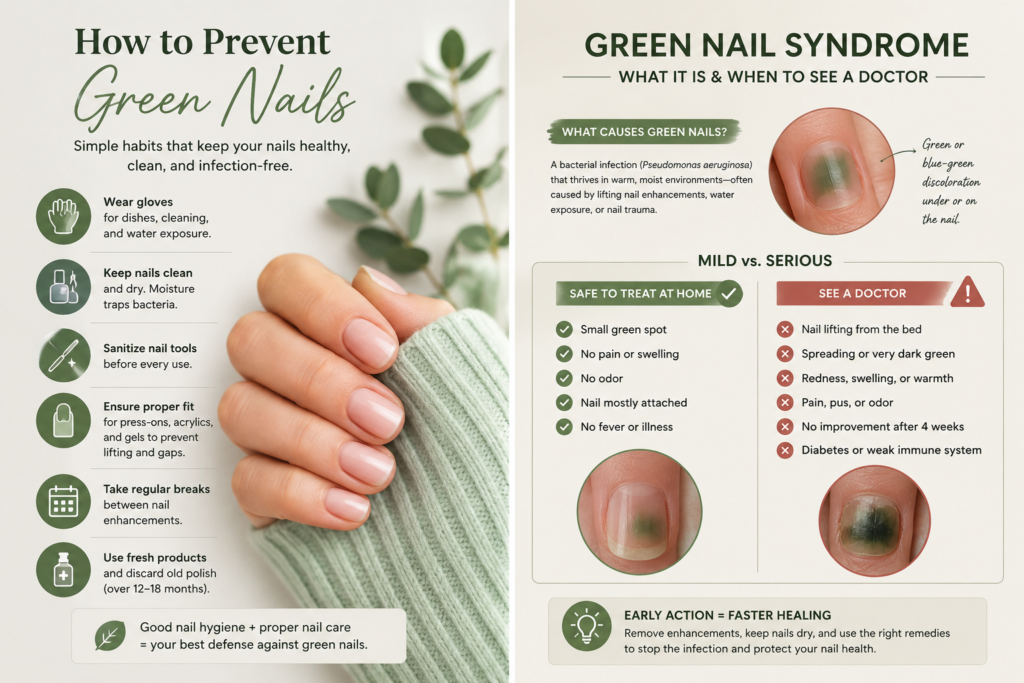
This is where many people get confused, and most articles don’t explain it clearly enough.
There are two separate timelines to understand:
1. Killing the bacteria: With consistent home treatment, the active infection can be cleared in 1 to 4 weeks. Once the bacteria are gone, the infection is over.
2. Getting rid of the green stain: The discoloration is pigment left inside the nail plate. It cannot be bleached out or washed away. The only way it disappears is by trimming it off as the nail grows out, which takes 3 to 6 months for fingernails and up to 12 to 18 months for toenails.
So after a successful week of vinegar soaks, your nail might look exactly the same but the bacteria are gone. You can cover it with regular nail polish during the grow-out period (just not acrylics or press-ons until the affected area has been fully trimmed away).
Can You Put Polish or Fake Nails Over Green Nails?
Regular nail polish: yes, you can apply it. It doesn’t prevent healing and can help if you’re self-conscious about the discoloration while it grows out.
Acrylic, gel, dip powder, or press-on nails: no, not during active treatment. Applying an enhancement over an infected nail seals in moisture and bacteria, recreating exactly the environment that caused the infection. Wait until the discolored section has grown out and been trimmed away, and you’ve had at least 2 to 3 weeks of symptom-free, dry nails.
Important: Don’t apply a new press-on or acrylic set just to hide the green nail. This is the most common reason green nail syndrome becomes a recurring problem.
How to Prevent Green Nails From Coming Back
Once you’ve dealt with nail greenies, the goal is to make sure they never come back. Prevention comes down to hygiene and nail care habits.
Before and during nail enhancements:
Prep the natural nail properly before application: clean, buff, and wipe with alcohol
Ensure correct nail size when using press-ons — too small creates gaps, too large causes lifting
Apply glue or adhesive with a rocking motion to prevent air pockets under the nail
Avoid getting water under the enhancement — wear gloves for dishes and cleaning
Check your nails regularly for any early lifting and address it immediately
Day-to-day habits:
Wash hands regularly but dry them thoroughly every single time
Keep nails short between sets so there is less surface area for bacteria to colonize
Sanitize nail tools before every use with isopropyl alcohol
Discard old nail polish, especially bottles older than 12 to 18 months — bacteria thrive in old product
Give your nails regular breaks between enhancements to air out and rehydrate
If you go to a salon, choose one that visibly sterilizes tools between clients
Frequently Asked Questions
Is green nail syndrome contagious?
Pseudomonas aeruginosa can spread through shared nail tools, nail files, and nail polish. It does not spread through casual skin contact. Avoid sharing any nail equipment, and sanitize your tools after use.
Can green nail syndrome go away on its own?
Green nail syndrome rarely resolves without some form of treatment. The bacteria need the right conditions (moisture, warmth, and a sealed environment) to survive, so removing the enhancement and keeping the nail dry can sometimes be enough in very mild cases. But actively treating with vinegar soaks or tea tree oil speeds recovery significantly and prevents the infection from deepening.
Is green nail a fungal or bacterial infection?
It is bacterial, caused specifically by Pseudomonas aeruginosa. This distinction matters because antifungal treatments alone will not resolve it. The remedies that work target bacteria, not fungi. If you have been treating with antifungals for weeks with no improvement, green nail syndrome is a likely culprit.
Can I use regular nail polish to cover green nails while they heal?
Yes. Regular nail polish does not interfere with the healing process. Avoid gel, acrylic, dip powder, or press-ons until the affected area has fully grown out. These seal in moisture and will likely cause a recurrence.
How do I stop green nails from coming back after acrylics?
Proper nail prep before application is the most important step. Clean the nail, remove oils, and use alcohol before applying any enhancement. Make sure the fit is correct — lifting or poorly fitted nails are the number one cause of recurrence. Keep nails dry and check regularly for any lifting between appointments.
When should I see a doctor about green nails?
See a doctor if the infection doesn’t improve after 4 weeks of consistent home treatment, if the nail is lifting significantly from the nail bed, or if you notice redness, swelling, pus, or pain around the nail. People with diabetes or a weakened immune system should consult a doctor before attempting home treatment.
The Bottom Line
Green nail syndrome looks alarming, but it’s one of the more straightforward nail conditions to treat at home. The bacteria are killed by simple, affordable remedies you likely already have in your kitchen or medicine cabinet. The most important things to remember: remove the enhancement, keep the nail dry, and be consistent with your chosen remedy.
The green stain will take months to grow out, but that doesn’t mean the infection is still active. Once you’ve done the treatment work, patience takes over. In the meantime, regular nail polish is perfectly fine.
If your nails keep coming back green after every set of acrylics or press-ons, the issue is almost certainly in the application process. A better prep routine and proper fit will break the cycle.